

2D proprietary patterns
The purpose of our 2D camouflage pattern is to offer a range of 2D camouflage patterns which can effectively interact sinergically with our 3D standardised Ghillie camouflage patterns.
Our 2D patterns are an additional option to the miserably oversaturated field of 2D camo design, where too many wannabes pollute this field. Our 2D designs cover the vast majority of biomes of the globe and at the moment are divided in 2 main families: Transitio and Exitium, both protected by copyright (SIAE).
The Transitio family (from Ancient Latin meaning "transition" - transĭtio, transĭtĭōnis) is designed to be used in nature away from human artifacts. and it is both suitable for military and hunting/photography purposes. It features 6 camo patterns in total.
The Exitium family (from Ancient Latin meaning "doom/destruction/ruin/death" - exĭtĭum, exĭtĭi) is designed to be used in war scenarios/aftermath and in regions with presence of human artifacts. It features 12 camo patterns in total.
Our 2D patterns are designed to conceal the human body, but they can be scaled to cover objects, vehicles and buildings. Licensing is available with high-res vectorial rendering. Our 2D patterns are designed to synergically work together on macro scales (vehicles/building), namely, patterns of the same family can be combined to create a meta-macro pattern.
Who designed them? The ProApto 2D Camouflage Patterns are designed by Dr. Emanuele RG Plini (Neuropsychologist).
Here below are listed our main 2D camouflage designs with key links to better understand their capabilities.

TRANSITIO
N E M U S
The NEMUS pattern (from Latin nĕmus, nemŏris - meaning woods/grove) is designed for transitions between wooded areas, brushlands and mountain valleys and ridges. It is a versatile pattern for the temperate and continental biomes, suitable for year-round use. It is more indicated for deciduous and coniferous woods. It suited for Taiga and Tundra biomes as well as Peatlands.

exitium
C I V I T A T U M
CIVITATUM is the first pattern of the Exitium family (which comprises 12 2D patterns). Civitatum (from ancient latin cīvĭtās, civitatis - meaning "civilization / nation" - namely Exitium civitatum - destruction of civilization) is designed for urban and industrial areas, but it is also suitable for rocky mountains and deserts. Civitatum is the most chosen pattern for rocky areas and industrial settlements.
transitio
M O N T A N U S
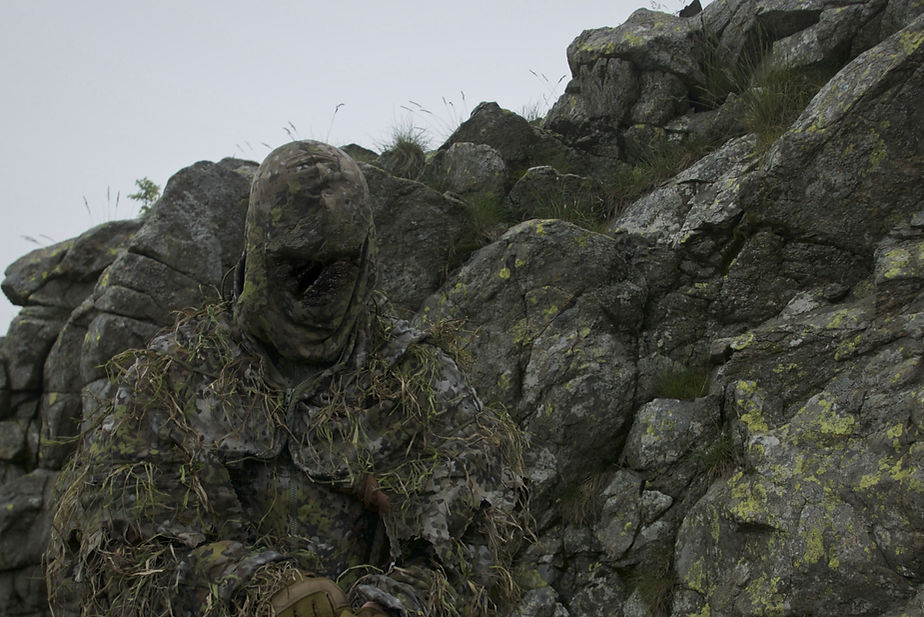
MONTANUS pattern was designed for mountain environments. It is a specific pattern for mountain walls, ridges and woods.The name comes from ancient Roman Latin montanus, montană, montanum - meaning "of the mountain", montaneous, and the noun transĭtĭo, transitionis, meaning transition, crossing. The name was chosen since the pattern is designed to be used across multiple kind of woods in several biomes

exitium
R U R A L I
RURALI is developed to be a versatile multiterrain camouflage capable of maximum effectiveness in open grasslands and rural fields. The name comes from ancient Roman Latin from the adjective ruralis, ruralis, rurale, meaning rural. The name was chosen in reference to the effect of human artifacts on rural areas, because of the high impact of agriculture and war for territories that dictate the rhythm of human presence on planet Earth. This camouflage works in Dry and Temperate environments as well as in urban settlements.

exitium
S I L V A N U S
SILVANUS is developed for evergreen areas such as coniferous forests, peatlands and taiga. The name Silvanus comes from ancient Roman deity Silvānus, a tutelary spirit protecting wooded areas, worshipped by the Romans for safeguarding forests and agricultural activities. Furthermore, in ancient Roman Latin the noun silvă, silvae means "forest, woods, fronds". This camouflage works in dark coniferous woods, open norther brushlands, northern littoral shores and urban areas. It is is a good base for 3D leafy elements.

We based our 2D and 3D camouflage development on the Koppen and Geiger climate classification to start from a solid scientific base and to facilitate decision making when choosing our camouflage designs. Each of our camouflage is classified accordingly, so the end-user can select the right camouflage just by focusing on the biome of use, this also translate in reduced subjective biases in matter of camouflage preferences.
